



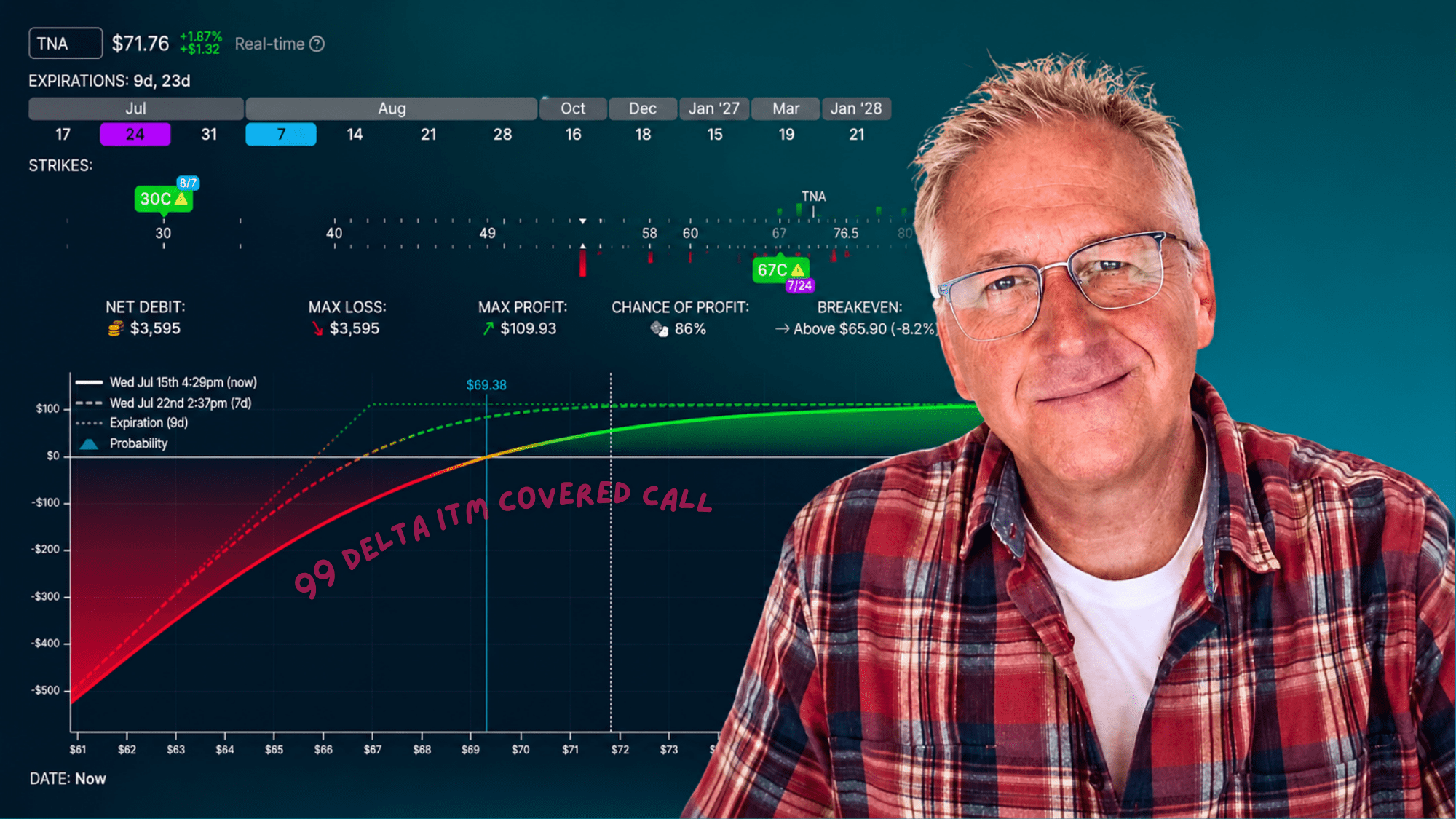


Most covered call traders buy 100 shares and sell an out-of-the-money call. John Greathouse takes a very different approach.
Learn the 99 Delta ITM Covered Call strategy
John Greathouse
John Greathouse is an options trader and the creator of the YouTube channel Retire on Dividends and Covered Calls. After spending years trading covered calls and cash-secured puts, he developed what he calls the 99 Delta ITM Covered Call, a variation designed to achieve the same objective as a traditional covered call while requiring significantly less capital.
What is an ITM Covered Call?
An ITM (In-the-Money) Covered Call differs from the more common covered call strategy because the short call is sold below the current stock price rather than above it.
The trade sacrifices any upside beyond the strike price in exchange for three benefits:
- Immediate premium income
- Built-in downside protection equal to the intrinsic value received
- A predefined exit price if the shares are called away
John views this as the inverse of a cash-secured put. Rather than collecting premium while waiting to buy shares, he owns the position first and then sells an in-the-money call against it to generate cash flow.
- You may also watch the first interview on this channel: Brian Terry – In the Money Covered Call
Replacing the shares with a 99 Delta call
The unique twist in John's strategy is that he does not purchase 100 shares.
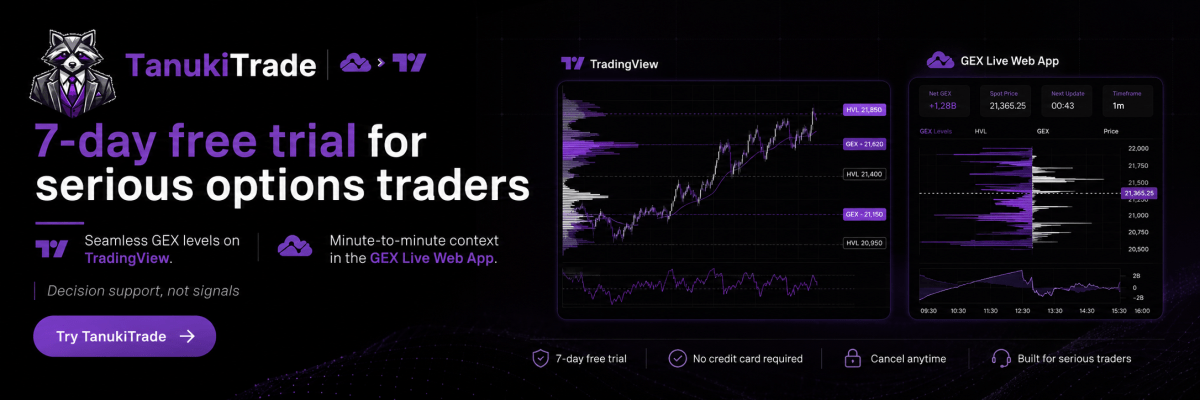
Instead, he buys a deep in-the-money long call with approximately 99 Delta. Because a 99 Delta option moves almost dollar-for-dollar with the underlying stock, it behaves similarly to owning the shares while requiring considerably less capital.
He typically selects a long call with about three to four weeks until expiration and chooses the deepest in-the-money strike available. His goal is to keep the remaining time value in the option as small as possible.
The reduced capital requirement is the main reason he developed the strategy. As some of his preferred ETFs became more expensive, replacing shares with a 99 Delta call allowed him to continue generating premium without committing as much cash to each position.

How John selects trades
John keeps his process deliberately simple.
His first requirement is that he genuinely wants to own the underlying. Rather than trading individual stocks, he primarily focuses on broad index and sector ETFs. He often trades leveraged index ETFs, such as TNA, TQQQ and UPRO.
He then looks for what he considers a favorable entry using the Keltner Channel. He prefers entering when price has pulled back toward the middle of the channel rather than after an extended rally.
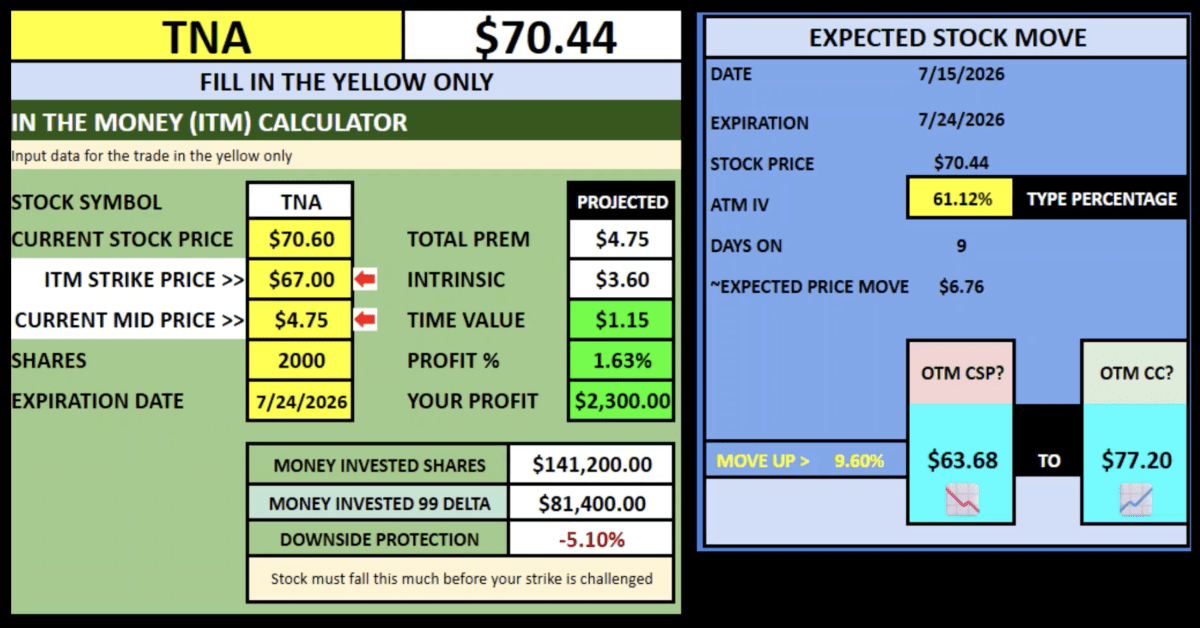
Finally, he selects an in-the-money short call that produces roughly 1.2% to 1.5% cash-on-cash return for one week. Instead of targeting a specific option delta, he works backwards from the weekly return he wants to generate.

Building the position
After choosing the short call, John purchases the 99 Delta long call.
Unlike a Poor Man's Covered Call, he does not buy a LEAPS option. He believes the additional time value embedded in a one-year LEAPS contract makes it difficult to generate attractive returns from an ITM Covered Call.
Instead, he uses a shorter-dated deep ITM call where very little of the option's price consists of extrinsic value.
In the example shown during the interview, replacing the shares with the long call reduced the required capital substantially while increasing the cash-on-cash return compared with buying the stock outright.
OptionStrat
…is a toolkit for options traders. OptionStrat is great for calculating and visualizing your strategies and trades
Get 20% OFF your first month with OptionStrat with this affiliate link
Managing the trade
John's objective is simple: collect premium.
If the short call remains in the money, he generally lets the position run until the final trading day. As time decay erodes the remaining extrinsic value, he buys back the short call once only ten cents of time value remain.
He then closes the 99 Delta long call as well.
Rather than rolling the long option forward, he prefers to close both legs and start over with a fresh trade that meets his entry criteria.
If the underlying falls below the short strike, he may continue holding the position, similar to someone managing a traditional covered call or cash-secured put. His philosophy is that the underlying selection and the built-in downside protection should allow him to remain patient during normal market pullbacks.

Understanding the risks
John emphasizes that this strategy is not risk-free.
Replacing stock with a 99 Delta call creates stock-like exposure, meaning substantial declines in the underlying can still produce significant losses.
He also points out an additional risk unique to this approach. If the underlying falls below the strike of the long call by expiration, that option can expire worthless, eliminating the synthetic stock position.
Liquidity is another consideration. Deep in-the-money options often have wider bid-ask spreads, so John recommends working limit orders patiently rather than accepting market prices.

Results so far
John has been using the 99 Delta ITM Covered Call as his primary strategy since May 2026, and he says it now dominates his trading.
During the interview, he shares closed trades totaling $102,936 in realized profit since introducing the strategy. He typically has around 15 positions open at any given time, executes 51 to 61 trades per month, and says his typical position size ranges from about $40,000 to $80,000, although he occasionally allocates up to $150,000 to trades in ETFs such as TNA and TQQQ.
According to John, replacing shares with a 99 Delta long call has significantly increased his capital efficiency, allowing him to increase his cash-on-cash returns.
He says this has boosted his average weekly profits from roughly $10,000 to about $30,000, and that he achieved his first $100,000 month in May before repeating the milestone in June, with July on track to do the same.

Who is this strategy for?
The 99 Delta ITM Covered Call is designed for traders who already understand covered calls and cash-secured puts but want a more capital-efficient way to generate option premium.
The strategy introduces additional complexity compared with owning shares outright, but for John, the trade-off is worthwhile because it allows him to control larger positions while committing less capital.
Whether traders choose this approach or a traditional covered call, John believes success comes from understanding the mechanics, selecting quality underlyings, entering at favorable prices, and managing positions consistently rather than searching for the perfect strategy.

I wanted to see it’s long term results and then I saw, “99 Delta ITM Covered Call as his primary strategy since May 2026” ???
I was expecting to see someone who at least have been trading his Bread-and-Butter strategy for 5 years, minimum
The dollar amounts doesn’t tell the whole story here. I got confused about his returns, he don’t mention his percentage returns trading the strategy. I’m sure that below 10k i’m your account it doesn’t makes any sense to trade it