







In this interview, Ravish Ahuja explains how he uses selling LEAPS to generate consistent income across different market conditions, sharing both the mechanics and the mindset behind the strategy.
Watch Ravish explain his selling LEAPS strategy
Ravish Ahuja
Ravish Ahuja is an experienced full-time options trader based in New Jersey, USA, with nearly a decade of market experience. He focuses on theta-based strategies and has executed hundreds of trades, sharing many of his approaches through his own YouTube channel.
- Options with Ravish on YouTube
- Ravish Ahuja: Two low-risk options strategies you need to know
- Ravish Ahuja: Double Calendar spreads
LEAPS = long-term options
LEAPS stands for Long-Term Equity Anticipation Securities. These are options contracts with expiration dates one year or longer into the future.
While many traders use LEAPS to buy long-term exposure to stocks, this strategy focuses on the opposite approach: selling LEAPS to collect premiums and generate income over time.

How Ravish sells LEAPS
In the interview, Ravish breaks down his practical mechanics of selling LEAPS.
Entry: timing, stock selection, and strike choice
Ravish typically enters trades after a 10–20% pullback, either in the broader market or in individual stocks. His focus is on:
- Strong, profitable companies
- Stocks he is comfortable owning long-term
- Situations where the sell-off may be stabilizing
For strike selection, he usually sells puts around 15–20 delta and expiring in one year. He tries to balance:
- Premium received
- Downside protection
- Desired entry price for the stock
He also asks a simple but powerful question:
“At what price would I be happy to own this stock?”
That price often guides the strike selection more than any single indicator.
Position structure: premium and downside protection
By selling long-term puts (typically around one year out), Ravish collects a large upfront premium.
This creates two advantages:
- Lowers the breakeven price
- Provides 20–30% downside protection in many cases
This is why the strategy can remain profitable even if the stock declines moderately.
Exit: when to take profits
Ravish does not always hold trades to expiration.
Instead, he often takes profits when:
- 25–30% of the premium is captured
- The return on margin becomes attractive in a short time
In some cases, trades can reach these levels within weeks, allowing him to:
- Close early
- Reallocate capital into new opportunities
If the trade moves more slowly, he is comfortable holding for several months or even the full year.
Management: mostly hands-off
One of the defining features of selling LEAPS is the minimal management required.
Ravish describes it as close to “set and forget,” with two main approaches:
- Let the trade play out
- Use a stop-loss, often around 2x the profit target
In a worst-case scenario, he is prepared to:
- Take assignment
- Hold the stock long term
- Potentially sell calls against it later
Importantly, he emphasizes that many trades may experience drawdowns before becoming profitable—similar to owning stocks.
Using leverage (advanced approach)
Ravish also uses margin to sell puts with lower capital requirements.
This can significantly increase returns on capital, but comes with added risks:
- Expanding margin requirements
- Potential liquidation during sharp downturns
Because of this, he stresses:
- Keeping cash reserves
- Avoiding over-leverage
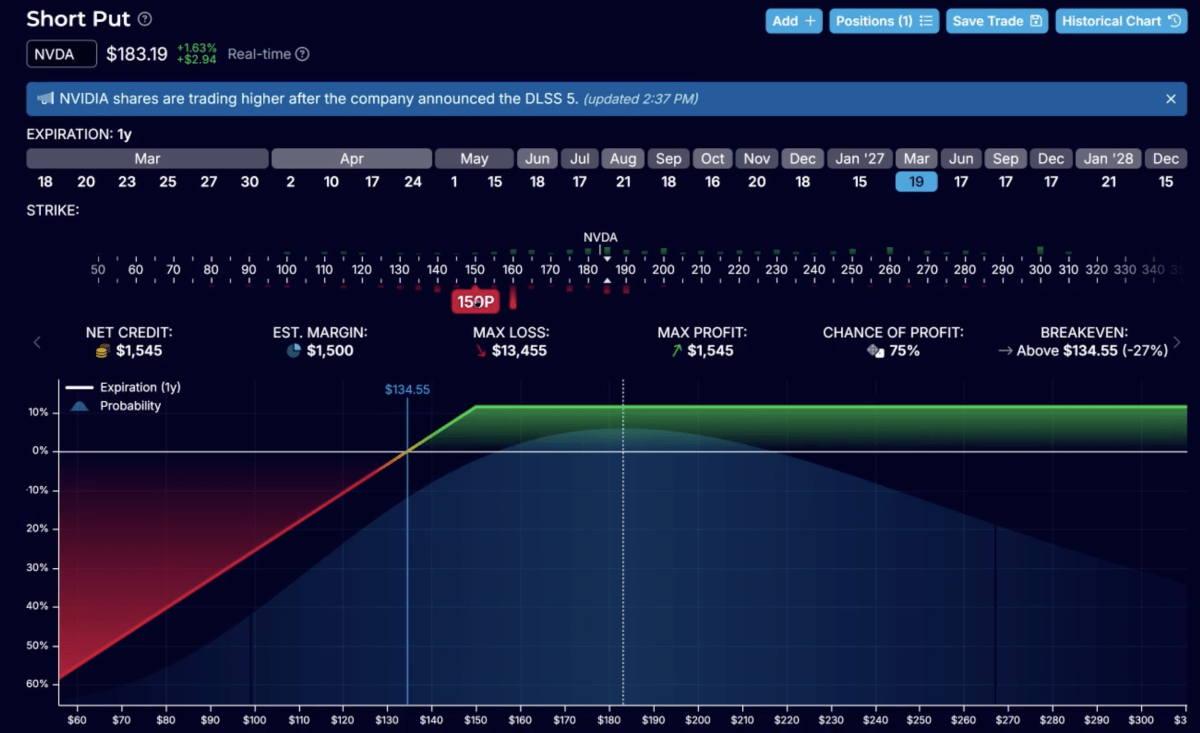
How the strategy can profit in any market
One of the most compelling aspects of selling LEAPS is its flexibility across market conditions.
According to Ravish, the strategy can:
- Generate profit if the market goes up
- Still earn income if the market stays flat
- Even remain profitable if the market declines within a certain range
This is possible because the trader collects a large upfront premium, which lowers the breakeven price and provides built-in downside protection.

Why selling LEAPS can outperform shorter-term strategies
Many retail traders focus on weekly or monthly options. However, selling LEAPS offers a different set of advantages, according to Ravish:
1. Larger upfront premium
Selling long-term options provides a lump sum payment, compared to smaller recurring premiums in short-term strategies.
2. Less active management
This is often a set-and-forget approach, requiring minimal monitoring.
3. Potential tax advantages
In some cases, holding positions for over a year may offer more favorable tax treatment, depending on the jurisdiction.
4. Reduced timing pressure
Because of the long duration, traders don’t need to precisely time short-term market movements.

Risk management and key considerations
While selling LEAPS has attractive features, it is not risk-free. Key risks include:
Margin risk
If using leverage, margin requirements can increase rapidly during market downturns, increasing the risk of liquidation.
Market crashes
Severe drawdowns can push stocks far below strike prices, especially in extreme environments.
Assignment risk
Traders must be willing to own the underlying stock if assigned.
Position sizing
Maintaining sufficient cash reserves is essential, especially when using margin.
Results from selling LEAPS
Ravish shares that he has used this selling LEAPS strategy across hundreds of trades over several years, with only a handful of losing trades so far. In many cases, he notes that even the losing trades could have turned profitable if held longer.
He also highlights that he has never been assigned on any trade. While he does not provide a precise annual return – since this strategy is used on a portion of his portfolio – he emphasizes that it is primarily designed to enhance overall returns, with some trades generating 30–50% returns on margin relatively quickly, and in certain setups even higher.

Combine income with long-term investing
Selling LEAPS is a powerful strategy for traders looking to combine income generation with long-term investing.
It stands out because it:
- Works across different market conditions
- Provides built-in downside protection
- Requires minimal day-to-day management
- Can enhance returns when used responsibly
For intermediate options traders, this strategy offers a compelling alternative to more active approaches, especially for those seeking consistency and scalability.
If you want to better understand the mechanics and real-world application of selling LEAPS, this interview with Ravish Ahuja is a great place to start.
Frequently Asked Questions (FAQ): Selling LEAPS
LEAPS stands for Long-Term Equity Anticipation Securities. These are options contracts with expiration dates typically one year or more into the future.
Selling LEAPS means selling long-term options – usually put options- to collect premium upfront, either for income or to buy stocks at a lower price.
Yes, selling LEAPS can generate income through premium collection. The strategy benefits from time decay but requires proper risk management.
Selling LEAPS involves longer durations, larger upfront premiums, and less active management, while short-term options focus on frequent trades and smaller premiums.
Key risks include market downturns, margin requirements when using leverage, and the possibility of being assigned shares at the strike price.
