
FREE THREE-PART LIVE COURSE
Master volatility - the heart of the options edge
Course start: Wednesday, October 21, at 1 PM ET

EdgeSeeker offers quant analysis for options traders. We will use the platform to illustrate some concepts in the course. But the focus is on education and practical understanding - not a sales pitch.
Understand and measure volatility
A FREE three-part course about volatility
If you trade options, you are trading volatility - whether you realize it or not.
This free three-part Theta TRAINING course, in cooperation with EdgeSeeker, will help you understand what volatility is really telling you and how to measure it.
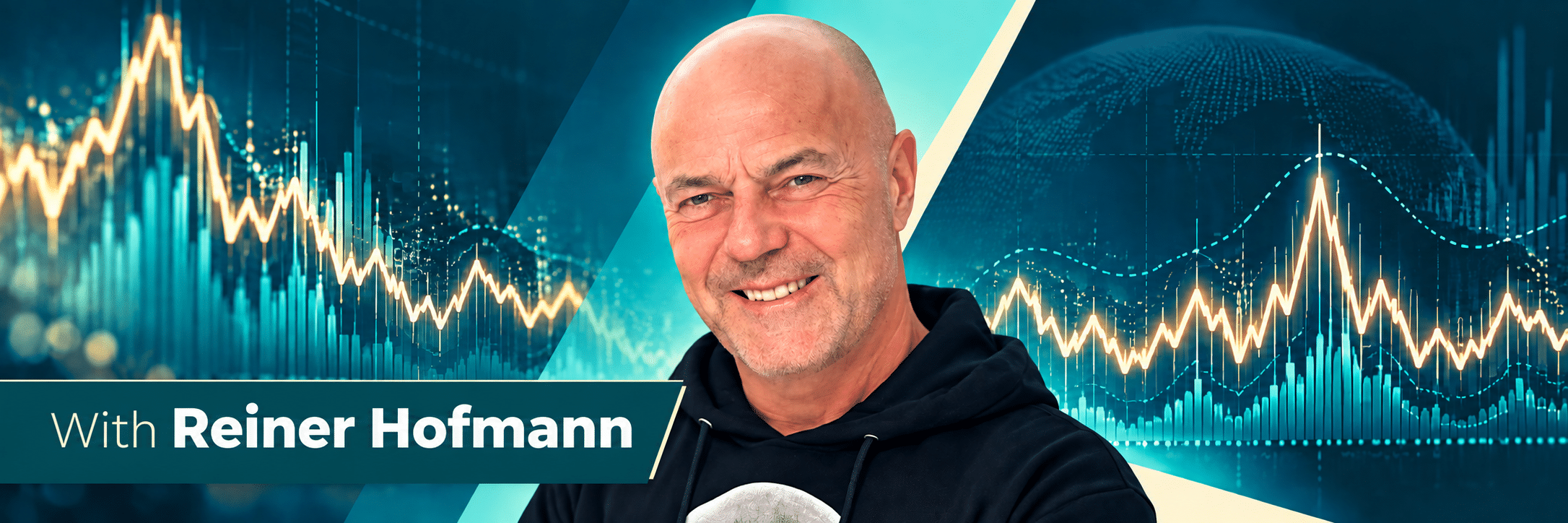
Reiner Hofmann will take you from the basics of implied vs. realized volatility to IV Rank, IV Percentile, Z-scores, Variance Risk Premium, mean reversion, and more - with a practical focus on how these tools can help you judge whether options are expensive, cheap, or simply normal.
Reiner Hofmann
Reiner Hofmann is a former executive in the technology industry who now focuses full-time on options trading. Over the past several years, he has developed a structured approach to volatility-based trading. He is a co-founder of the options trading platform EdgeSeeker.
Session 1: Understanding Volatility – The Heart of the Edge
Wednesday, October 21, 2026 at 1 PM ET
Why are some options genuinely expensive while others only look expensive?
In Session 1, we move beyond direction-based stock thinking and introduce the core framework behind systematic options trading: volatility, probability, and relative value.
You’ll learn how professional option traders distinguish between what the market is pricing and what actually tends to happen — and why that gap can create a structural edge for premium sellers.
Goal: Learn how to identify and measure a potential volatility edge instead of relying on intuition.
- From stock thinking to options thinking: price, volatility and time
- How Black-Scholes separates pricing probability from real-world probability
- IV vs. RV: expectation versus realized movement
- Why volatility exhibits clustering and mean reversion
- How to judge whether volatility is really high using IVR, IVP and IV Z-Score
- Variance Risk Premium: when is the market paying too much for uncertainty?
- Why Delta ≠ Probability of Profit
- How EdgeSeeker combines these inputs into a systematic trade-validation process
Session 2: Understanding Volatility – Reading the Structure of the Edge
Tuesday, October 27, 2026 at 1 PM ET
High volatility alone does not create an edge. The real question is where the market is paying a premium, what risk that premium compensates for, and whether the compensation is attractive enough. "Understand what you are being paid for.“
In Session 2, we move beyond the absolute volatility level and examine the structure of volatility across direction, strikes and expirations. You’ll learn why downside risk is usually priced differently from upside risk, what Skew and Term Structure reveal about market expectations, and why every unit of Theta income comes with Gamma risk.
Goal: Learn to read the structure behind option premiums — and understand when volatility is working for or against your trade.
- Variance Risk Premium – Part II: When is fear over- or undercompensated?
- Up Volatility vs. Down Volatility: Why downside risk gets paid differently
- Volatility Skew: What the market is really afraid of
- Term Structure: Contango, Backwardation and the timing of risk
- Roll-Down vs. Roll-Up: When the volatility curve becomes tailwind or headwind
- Volatility Surface: Bringing strike, expiration and IV together
- Delta revisited: Why Delta is useful as a proxy — but not an exact probability
- Theta & Gamma: Why option income is compensation for convexity risk
- Theta/Gamma Ratio: Understanding the “rent per unit of risk”
- EdgeSeeker Live Demo: Turning volatility structure into a validated trade setup
Session 3: Managing trades and monitoring results
Thursday, October 29, 2026 at 1 PM ET
What if the option market is not just reacting to price — but actively influencing it?
In Session 3, we go beneath the chart and examine the mechanics that connect option pricing, Greeks and dealer hedging to actual market flows. You’ll learn why Gamma can explode near expiration, why Vega and Volga change the risk of seemingly harmless positions, and how dealer hedging can either stabilize or amplify market moves.
Goal: Learn to read the hidden mechanics behind price action — and understand when option positioning creates stability, acceleration or fragility.
- How Vega translates volatility changes into option P/L
- Why Gamma and Vega must always be evaluated together
- Theta/Vega Rent: Compensation for carrying volatility risk
- Volga: The convexity of volatility and why the wings matter
- Why falling IV can increase Gamma risk
- Where Gamma really lives: ATM, front month and near expiration
- GEX: When dealer hedging dampens or amplifies market moves
- Call Walls, Put Walls and Gamma Flip: Key mechanical levels
- Vanna and Charm: Why Delta changes through volatility and time
- EdgeSeeker Live Demo: Turning market mechanics into a structured trading decision